Showing posts with label gardening. Show all posts

Friday, March 16, 2012

food forest planning (aka, i might be overdoing it a bit with the fruit)

I have a spreadsheet file that includes an embarrassingly large number of sheets devoted to growing things, a large percentage of which cover our future fruit trees, brambles, and bushes. and no, you still can't see it This is because I have trouble just picking a fruit-bearing specimen and must instead lay out all the attributes of each variety so that I may zero in on the ones best suited to our geographic location and climate and preferences. I like to pretend like I know what I'm doing

For some reason, I don't have this affliction (at least not as bad) with garden fruits and vegetables, probably because if something doesn't work out one year, I can always try another variety the next year (except for perennial vegetables, but there's only a few of those); trees, brambles, and bushes, on the other hand, must actually survive year after year and require a serious commitment of time, energy, and money, so the selection process is much more complicated for me. We're talking about our future food source here, people - this is important stuff.

There are many factors to consider when making such choices. Important ones include pollination requirements, minimum chill hours (this is still somewhat of a mystery to me, but I'm going to take my friend Anna's advice and just get trees that are not "low chill"), and disease resistance. (Truthfully, I haven't really delved into the disease resistance of any of these varieties because I'm not adverse to babying them somewhat, but if y'all have any suggestions or see me making some horrible mistakes here, lemme know. I'll pay you back for your expertise with bushels of your favorite fruit that you helped me grow!) Other considerations I deem important are harvest times (trying to spread the harvest out among several varieties of a particular species as long as possible), keeping capability, and flavor, of course.

Sadly, in addition, I need lots of COLORS. I can't be content with plain old red apples or purple plums. Honestly, it probably won't matter much to the locals that are my future customers, but I envision a honor farm stand that is just bursting forth with every color imaginable because of my judicious and thorough selection of fruits and vegetables and that ends up being a roadside attraction where the locals congregate and shoot the shit at. Like a bar. But since we're in a semi-dry county, a produce bar. HA.

Anyhoo, these are my selections:
  • Apples: Red Delicious (red), Granny Smith (green), Yellow Newton Pippin (gold/green), Golden Delicious (gold), Ashmead Kernal (russett), Arkansas Black Spur (dark red) and Gravenstein (green with red stripes).
  • Raspberries: Red Heritage (red) and Fall Gold (gold). duh
  • Plums: French Improved (purple), Methley (red), and Green Gage (green).
  • Cherries: Craig's Crimson (nearly black), Sweetheart (red), and Rainier (yellow with blush).
  • Pears: Red D'Anjou (red), Bosc (russett), and Blake's Price (golden). 
  • Blueberries: Patriot, Bluecrop, and Chandler for 90+ days of fruit.
  • Blackberries: Choctaw, which is the earliest ripening blackberry on the planet so that we can eat some fruit other than cherries in May (May might be a stretch; June is more likely. Still, that's early for blackberries).
  • Apricots: Harcot (red blush) and Gold Cot (golden yellow).
  • Peaches: Loring (yellow).
  • Nectarines: Mericrest (red/yellow) and Arctic Blaze (red/white).
kill me now, please

That's 21 fruit trees plus a shitload of brambles and bush fruit. It's fucking insanity, I know, but if I'm going to have a forest garden, I want it to be a literal forest. That I can sit in under trees in the shade and read a book to the dog while the chickens eat fruit tree nemeses and fertilize them and probably peck at my feet (hard) because they're mean fuckers like that.

And this doesn't even take into account the six citrus varieties that I plan to shuffle into the cabin at the first sign of fall frost. Maybe a cheap greenhouse really is in order - not for growing vegetables but for providing a suitable climate for those sissy citrus plants.

I should mention that I plan to keep all our fruit trees confined to a 10'x10' (or even smaller) canopy spread and height via aggressive pruning. And the citrus trees will be kept to potted plant size to facilitate their being brought into the greenhouse (otherwise known as: being demanding).

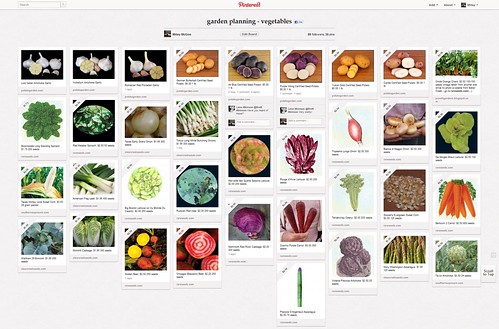
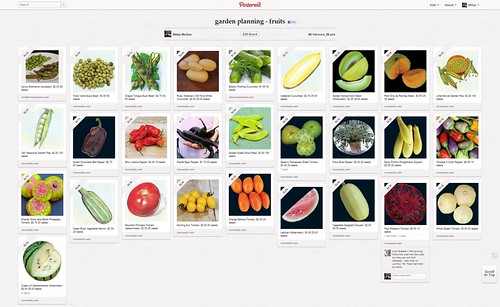
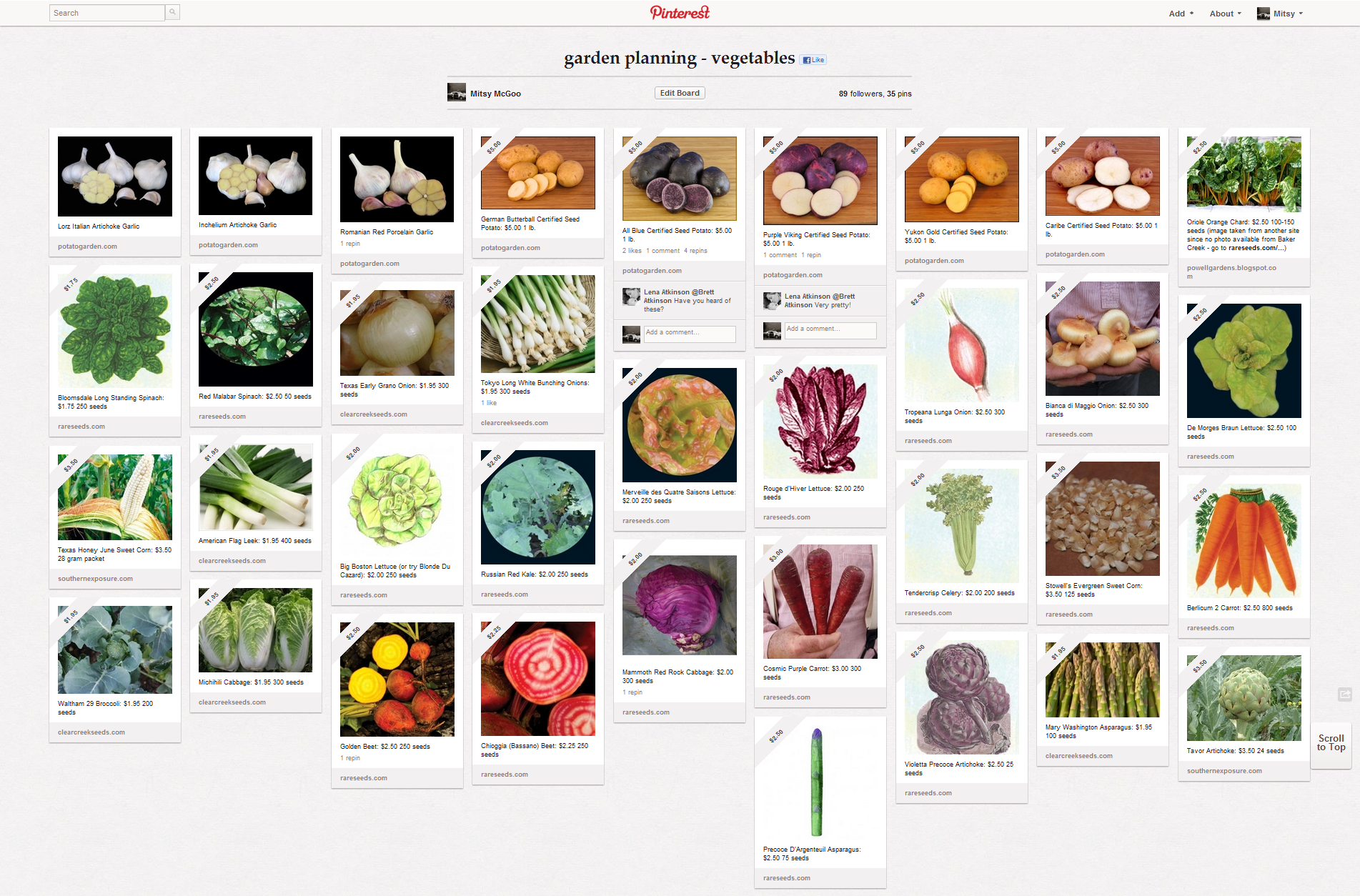
In case you needed a visual representation of the fruit color spectrum. It's ok, I did, too.
[ pinterest link here ]

Now that we have this frightening part of my mentality bared for all to see, let's go get (apple)sauced, folks, cuz it's Friday, woot woot!

~ mitsy

Thursday, March 8, 2012

short and long term plans

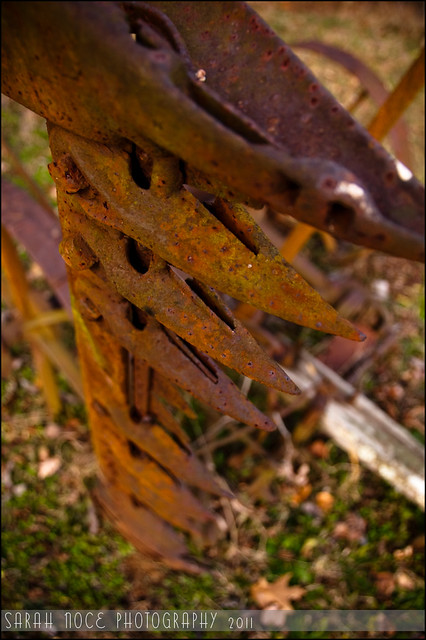
Whatever this farm implement is, I'm guessing we won't need one.

I originally entitled this post "short and long term goals", but the word goal has always bothered me because it suggests that you have failed if you don't achieve whatever it was you set out to do. I am, however, very much a planner and much prefer making plans to setting stupid and potentially unattainable goals and thus setting myself up for disappointment. Plans are much more flexible than goals in my mind - they can be tweaked as circumstances present themselves. So since we're embarking on a pretty fantastic adventure, I though it would be interesting to map out (you know how I love maps - even mind maps) some things floating around in the old noggin that have to do with our future at the holler.

Paying off the land is one long-term plan, and we're hoping to do that sooner rather than later, but since we have no form of income lined up (yet), I'm just going to assume that will take 20 years since that's how long our mortgage is amortized for.

I think short-term plans are a bit more fun to fixate on, so here's the quick and dirty on what we hope to accomplish in the next two years:

Mid 2012: Sell our house and move. Hoping to walk away with a little cash, but if that doesn't happen, we should still have enough of a nest egg to take care of our financial obligations (debt and utilities), ourselves (food, including the pets), and vehicle maintenance for two years.

Late 2012/early 2013: Figure out what farm implements we think we will need and purchase them now while we have cash. I'm still not sure if we need a tractor and think an ATV might suit our needs better, but Jay might be on the tractor side of the fence. I can see the benefit of a tractor for moving things around, but I'm not sure how much will need to be moved anyway due to the permaculture-based approach we plan to take to growing plants and raising animals. Plus, riding ATVs is fun!

Early 2013: Finish the garden infrastructure (this sounds ambitious, but I plan to work on it from the moment we get out there and until my fingers freeze off in the depths of winter). Although I think it would be fun to have a fall 2012 garden if we get out there in time for it, I'm more interested in establishing the infrastructure needed for our long-term growing needs. I've found that filling raised beds with compost in the fall and letting it mellow out over winter worked great for spring planting for me in the past (albeit on a much smaller scale). A spring 2013 garden is essential in my mind for starting our food growing quest. I would like to have the entire garden base according to my OCD plan in place by fall 2013 and be using cover crops by that summer to minimize the need to purchase more organic matter.

A rainy afternoon in town.

Early 2013: Start fencing in areas for livestock. Again, fencing costs money, so we want to get going on that while we have it to spare. Temporary fencing is one option to save on costs, and I don't mind the idea of having to move it around regularly according to my paddock/pasture rotation plan. However, permanent fencing is preferable if affordable enough.

Early 2013: Acquire the start of our farm animal (aka, protein and dairy source) menagerie. I suppose that breeding stock would be logical first purchases, but I'm not sure if I want to dive right in with that or just get some trial animals to see how we do and then move on to semi-permanent animals that we will use for producing more animals. I don't want to overwhelm ourselves with too much at once, but making those purchases as soon as possible would be advantageous. I would really like to eat home-grown bacon by the 2013 slaughter season.

Early 2013: Clear the area for the forest garden and plant fruit trees (I'm not really sure when fruit trees are supposed to be planted, but at least the area can be cleared). How we go about clearing the area depends on what farm implements we decide to purchase. I think a bush hog would be a worthy investment because it would likely have a lot of use in years to come and can be pulled by either tractor or ATV.  I'm starting to think that we may not need a bush hog at all if we get animals that actively forage and don't have finicky palates (especially if our goal is to eliminate commercial feed costs).

Mid 2013: Start preserving the garden harvest in the form of canning, freezing, and/or root cellaring.

Mid 2014: Start making money in some form or other. Probe the local community for what niches might be filled with our skills. We have quite a few ideas and are striving to find income streams that can be home(stead)-based because we would like to avoid taking jobs away from the locals, and plus, we want to be working on the farm, not a nine-to-five (or even a nine-to-noon). But we must remain realistic in that regard because bills must be paid, and we don't pay bills late. As scary as being unemployed sounds, I'm convinced that we can make a home-based income work.

Whenever: Kill some deer on our land. Venison is delicious, and I'm really excited about eating it.


The sooner we start these projects, the sooner we'll be prepared to live the lifestyle we yearn for if we're able to earn a modest income (or return to the work force if we need to resort to that to pay our bills). These may sound like laborious chores to most people, but we can't wait to get started on what we see as interesting projects that will bring us closer to our homesteading goal (gasp, that word!). Jay's thoughts differ somewhat in that he more willing to find a real job sooner than what I have in mind, but we're on the same page with regard to infrastructure (and eating homegrown pork as soon as possible!).

~ Mitsy

Tuesday, March 6, 2012

garden planning: vegetables + fruits

In true Mitsy McPlanner fashion, I've scoured heirloom seed sources and already selected the vegetables and fruits (and herbs and ground covers and wildflowers, oy) I wish to grow in our future half-acre garden. This list will no doubt change somewhat as I over-analyze what we will need, but it's fun to figure out what we should grow to satisfy our individual appetites and tastes.

In selecting our future garden bounty, I found it helpful to really evaluate what we enjoy eating regularly that's easy to prepare and quick to clean up. Our breakfast and lunch routines tend to differ (although we both agree that I make a mean biscuits and gravy) and we usually either just eat leftovers or fend for ourselves in that regard, so I'm going to focus on what we like for dinner since I enjoy cooking, especially when accompanied by a few glass of wine, a couple shots of whiskey, or ice-cold Coronas in the summer (or all three). Suffice to say, the dog loves cleaning up after me.

I tend to make a lot of wrap/burrito/gordita/taco-type meals, which oftentimes includes a cabbage variety, meat, onions, perhaps julienned carrots, some sort of nut (pine nuts are a fave but are freaking expensive), and a crumbly cheese (usually feta or cotija), all tossed together with a homemade vinaigrette (extremely spicy - we like it hot) and wrapped up in a flour tortilla. This quick meal works great for us because Jay can omit the cheese and nuts if he prefers, he gets lots of meat, I get lots of vegetables, it's crunchy and fresh, and it's relatively easy to clean up (one pan for cooking the meat and one large bowl for mixing everything together).

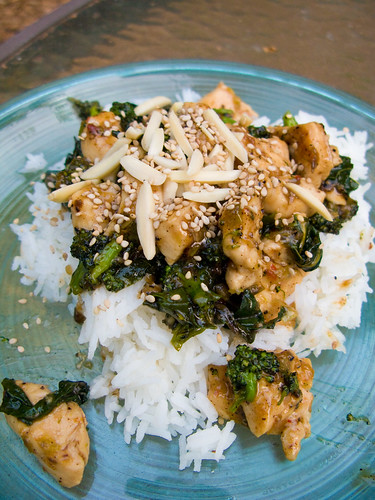
I make a lot of stir-fry that generally includes thinly sliced chicken or beef, a sauce that I throw together (from oil, vinegar, mustard, mirin, honey, garlic, fruit juice, and whatever leftover store-bought sauce is sitting in the door of the fridge, if any), white rice, and any vegetables I have on hand. I usually like a garnish of some slivered almonds and/or sesame seeds.

Mitsy's chard-alicious stir-fry.

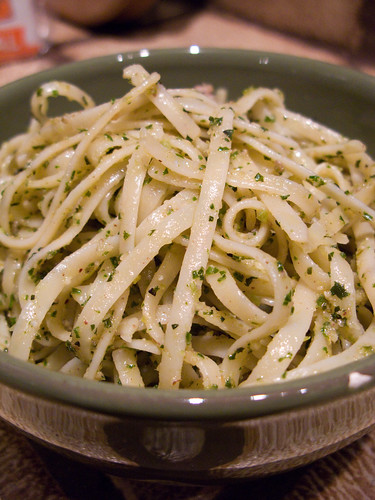
Pasta is another regular on our menu, and we oftentimes eat spaghetti once a week. or more We love penne with pesto, especially when I make it from the chard or kale that is threatening to take over the garden. I love aglio olio (garlic and olive oil) linguine or fettucine with sauteed sundried-tomatoes, pine nuts, onions, bacon, broccoli, and parmesan.

You can make pesto out of any savory green
(a splash of vinegar when mixing it all in the food
processor makes it even better). Take that, basil!

I enjoy having lots of greens handy for garden salads and really can't get enough red leaf, green leaf, romaine, and butter lettuce. Jay will usually eat a salad with whatever other dinner fixings I've prepared but really likes it when I make a vinaigrette-based coleslaw (we both think mayonnaise is the devil). My favorite main course salad combination is one recipe pilfered from a friend that includes whatever salad greens you have on hand, avocado, mandarin oranges, black olives, red onions, grape tomatoes, apples, and walnuts, with a simple vinaigrette. For a dinner side salad, however, we prefer just some red onions, pine nuts, and feta over red leaf lettuce.

I like making savory pies, like shepherd's pie, pot pie, and polenta tamale pie, all of which can use peas, potatoes, carrots, garlic, onions, corn, celery, and beans, but generally steer clear of anything cheesy or creamy because Jay will flee the kitchen entirely when I make something like that (better for my waistline anyway).

Jay will generally eat anything that involves a non-creamy sauce and meat and will tolerate vegetables as long as they're cut up small enough and/or incorporated into a smooth sauce (like pesto). Meat definitely dominates our dinner table, but I usually try to prepare some sort of side vegetable and/or salad if it's just a hunk of meat and not incorporated into something else. but not always, and sometimes we eat just skirt steak or tri-tip for dinner, and i'm ok with that because the bloody mary marinade from our local market is da BOMB

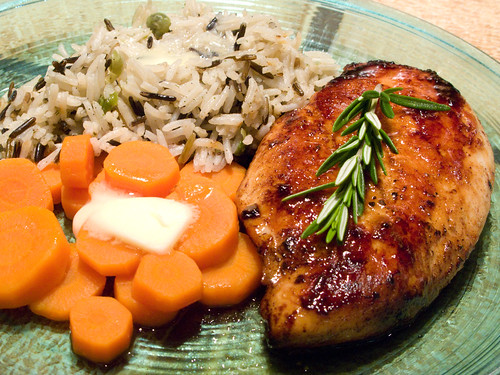
Chicken with black pepper maple sauce, wild rice, and sauteed carrots.
He ate the chicken and rice but avoided the carrots like the plague.

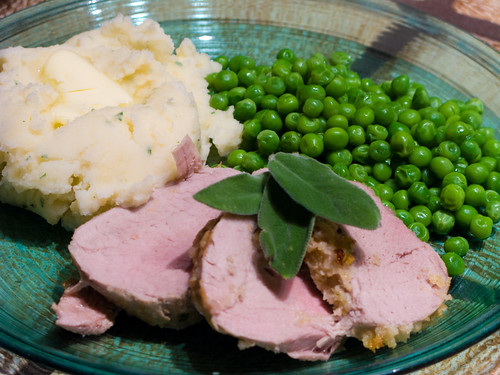
I can't wait until this is pork tenderloin from OUR pigs.
He ate the mashed potatoes, but the peas were given the middle finger.

I enjoy making vegetarian dinners as well, like my famous chimichangas made with TVP and some other secret ingredients that I got die-hard meat-eaters to think was ground beef and scarfed down without hesitation. Other veg options include homemade flatbread pizza and greek feta croutes.

I make a lot of soup in winter, which makes it real easy to make a meal out of whatever you have on hand. I make killer french onion soup, minestrone, and beef stew (I get my mad soup making skillz from my Ma).

All that being said, I figure our biggest food costs in the long term (i.e., after we establish our meat and potentially dairy animals) will come from nuts, specialty dairy items (like cheddar and mozzarella cheese; I plan to make feta from our sheeps' milk, although I'm not totally sure I want to be tied down to milking any animals yet so I might try to source this locally), flour for bread and pasta making, spices, and wet ingredients like vinegars, oils (I have a weak spot for gourmet varieties), honey, nut butters, and hot sauces (although I plan to grow a variety of hot peppers, including the jolokia!).

Oh yea, and booze. We do love our liquor.

I think I've become pretty adept at preparing simple meals with homemade sauces in short order - I rarely consult a cookbook anymore, although I do go through waves of recipe hunting when I need new inspiration or get bored in the kitchen. Most recipes are just variations of something else, it seems.

So now that you are (probably uncomfortably) familiar with what we like to stuff our faces with, here are my vegetable selections:

Larger version here.

And here are the garden fruits we plan to grow:

Larger version here.

What can I say, we love tomatoes (helloooo marinara sauce, salsa, caprese salad, bloody marys, BLTs, sun-dried tomatoes... need I go on?) and hot peppers (we've lost count of how many bottles of Dave's Insanity Sauce we've consumed). Jay wants pickles (mmmm, Chicago dogs). I like broccoli, asparagus, and beets, which he has little interest in (although he did like my beet candy, so as long as I make them not taste like dirt). We both love artichokes, especially when I stuff 'em with seasoned croutons. I love potatoes and corn, and he'll certainly eat them if put in front of him. Onions are pretty important for cooking in general. But garlic is absolutely mandatory. I use it in just about everything (hence, the three varieties of garlic).

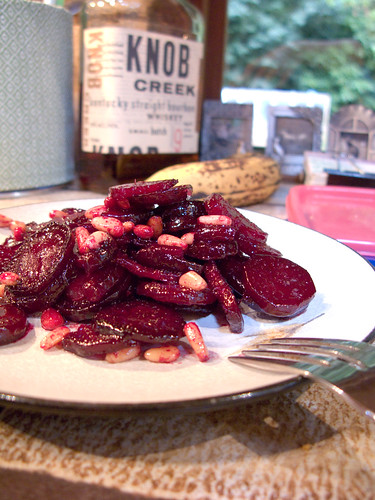
That's right, beet candy. You heard it here first, friends.
(I highly recommend including the whiskey.)

It makes me happy to see a variety of colorful vegetables and fruits in my garden and refrigerator (plus they say that's the best way to eat healthy: with myriad colors and textures), and if I have any hope of making a honor farm stand a viable future income source (albeit probably very small), I figure I should grow things that are visually appealing in addition to being delicious and nutritious.

What are you growing or plan to grow that I haven't included in my future garden arsenal?

~ Mitsy

Tuesday, January 10, 2012

future farm critters - part 2: piggies

Two breeds of porkers that we like the sound of are Ossabaw Island and Red Wattle/Waddle hogs. First we'll talk about the Ossies (yes, I coined that phrase just now).

Spotted, hairy piggies make me squeal.
[ image courtesy Nature's Harmony Farm ]

Apparently, a bunch of Spaniards left these guys to fend for themselves on an isolated piece of dirt in Georgia called Ossabaw Island. Because they were feral, the breed stayed pretty small (about 200 pounds market weight), forages well, and will drink just about anything. They'll root up all sorts of shit, so best to put them someplace where you want to take advantage of that, like out in the woods or in a new garden area or whatever. My garden is pictured below with me in the background hoe-ing away.

YEAH. RIGHT.
[ image courtesy Country Living ]

I could only hope for a fraction of the beautifulness of this garden.

Anyway, Ossies are supposed to be pretty independent. (We like independent. I'm lazy.) They're supposed to be excellent mamas and have an extremely high healthy birth rate. (Because I don't want to have to help a pig give birth, I ASSURE YOU.)

And tasty, too. Because although I have no experience with slaughtering swine, this will be the end result, and I love me some bacon and chops. And ribs. And sausage.

In direct contrast, Red Wattle hogs are BIG. Like 1,200 pound market weight big. And they get big fast because they're lazy. Their exact origin is unknown, but they might originally be from Australia. Ossies (my newfound word) + Aussies = clearly a sign that we should raise both. They're good mamas, too, and have crazy appendages that I find weirdly charming hanging off their cheeks, hence, the wattle descrip.

Wattle: the appendix equivalent of pig facial features.
[ image courtesy porkfoodservice.org ]

I don't care if they're edible, though, I'm not eating the wattles.

The Ark of Taste describes the Red Wattle hog as "...known for their hardiness, foraging activity, and rapid growth rate. The sows are excellent mothers, who labor litters of 9-10 piglets, and provide good quantities of milk for their large litters.  They adapt well to a wide range of climates, making them a good choice for consideration in outdoor or pasture-based swine production. Red Wattle pork is exceptionally lean and juicy with a rich beef-like taste and texture."

That last line is what has me sold. Next in the future farm critters series (but not necessarily the next post because, holy smokes I have some holler pictures to show off): St. Croix sheep!

over and out, hoeboats

~ Mitsy

Monday, November 14, 2011

cover crops

Earlier this year, I had never heard of cover crops before, and frankly, it sounded really boring and not-fun-gardening like tomatoes and onions and squash and summer bountyliciousness are. What, you just grow them and then... let them die? Waste of my precious weekend time, people. Besides, I can't grow anything in winter anyway because redwood trees have a habit of being really tall, and coupled with the fact that our property is on the north side of a mountain, the low winter sun doesn't quite grace us with its presence. Stupid sun.

But then, I kept seeing cover crops being mentioned on the absurd number of homesteading blogs I read, and then I noticed that my local feed store carried a multitude of cover crops in bulk, and then I learned that cover crops will probably grow even in limited, dappled, lame sunlight and that they will replenish my beloved raised beds with tasty nitrogen and organic matter with relatively little work on my part. Ding ding ding ding!

So, I seeded a bunch of my beds on October 16, and holy smokes, that shit took off like Snyder's hound!

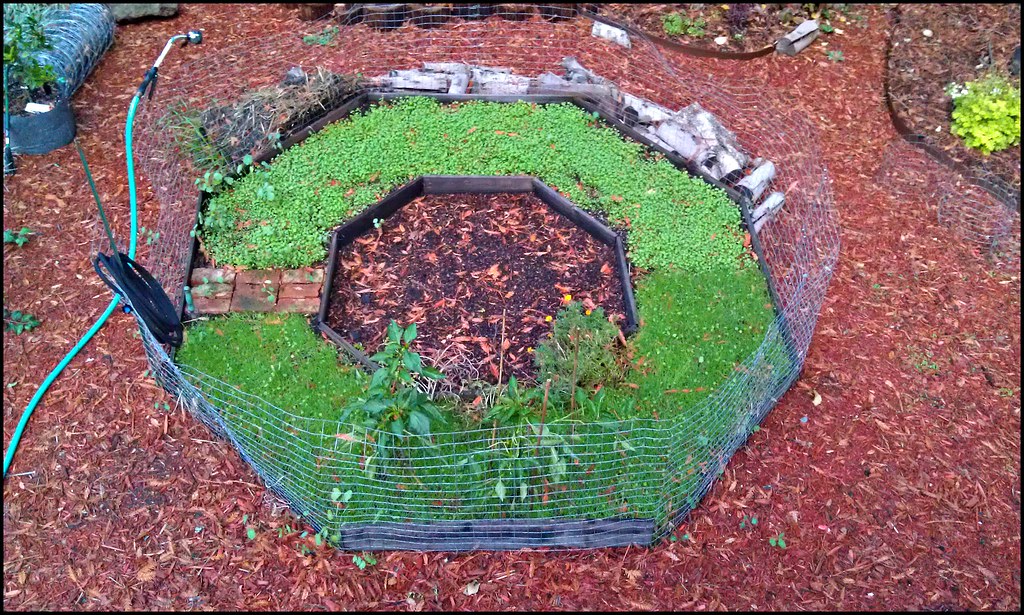
The Octagarden agrees that cover crops rule.

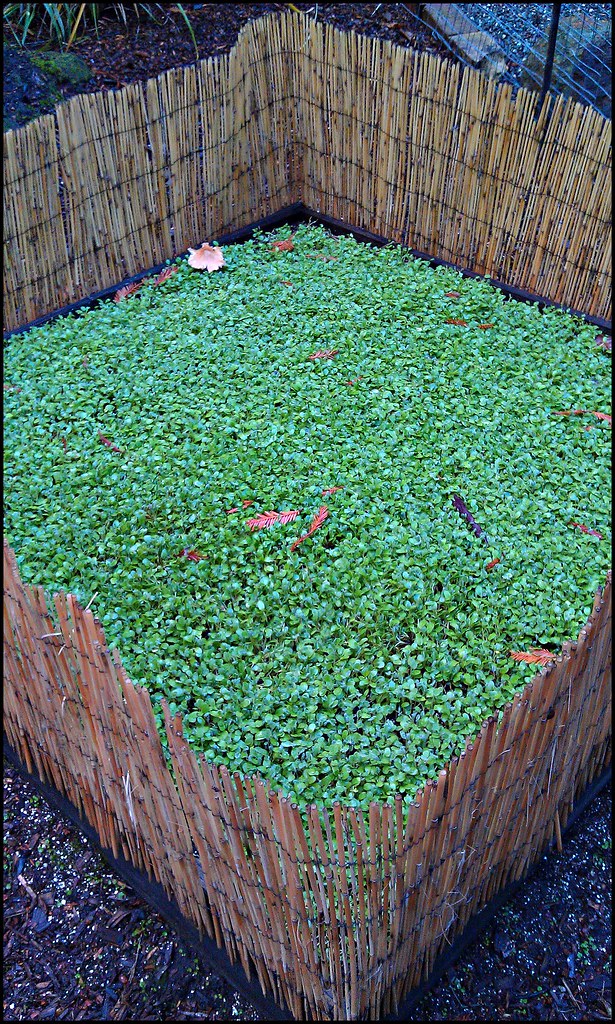
I bought two different cover crops to start out with. I used red clover on the top half and a clover/rye mix on the bottom of the front yard Octagarden. My pepper plants are actually still trying to put out some bell peppers. In November. And whoda thunk that nasturtiums would reseed themselves after my brutal mass extermination in mid-October, but I will take whatever I can get considering my slacker gardening conditions.

Now I'm a little disappointed because as you can see, the clover is clearly not red. I surmise that my limited sunlight might be hampering the redness, but it's still nice to have greenery instead of wilted, dying, unkempt summer crops littering my beds. 

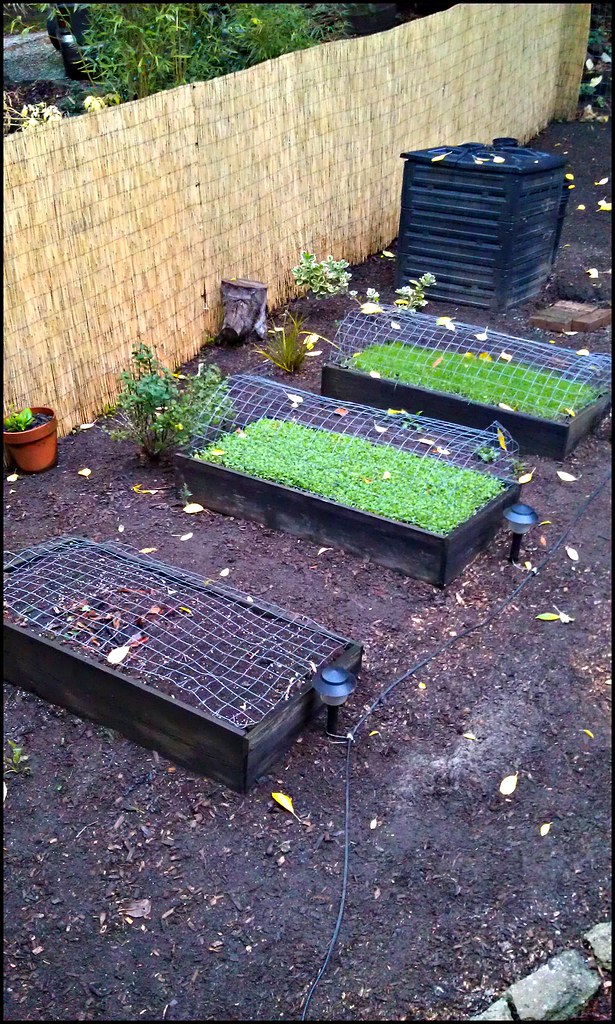
Clover in the middle and clover/rye mix in the back.
Stampeded and buried tomatoes in the front.

In the back yard, which gets even less sun than the front yard, the clover and clover/rye mixes are happily growing away. I invented my own experiment for the front bed: it was overrun with volunteer tomatoes (from last year) that I never staked properly so the fruit was just rotting away. I ripped those motherfuckers out, smashed them down into the bed, fruit and all, and buried them with a heavy layer of used peat moss I had lying around. I'll either get a shitload of more volunteer tomatoes next year (that I promise to provide support for) or the whole thing will turn into a rotting, disgusting mess that I will forget about and unknowingly stick my hand into come spring. Fingers crossed for Option 1.

Now forgive the ugly bare dirt surrounding the above beds. I had this covered in bark mulch up until yesterday but then had the bright idea to shovel it all into the chicken run and grow grass in this space instead. Since I know now that I can grow rye here, I want this area seeded in grass. Because I need more maintenance and yard work to do. Smart.

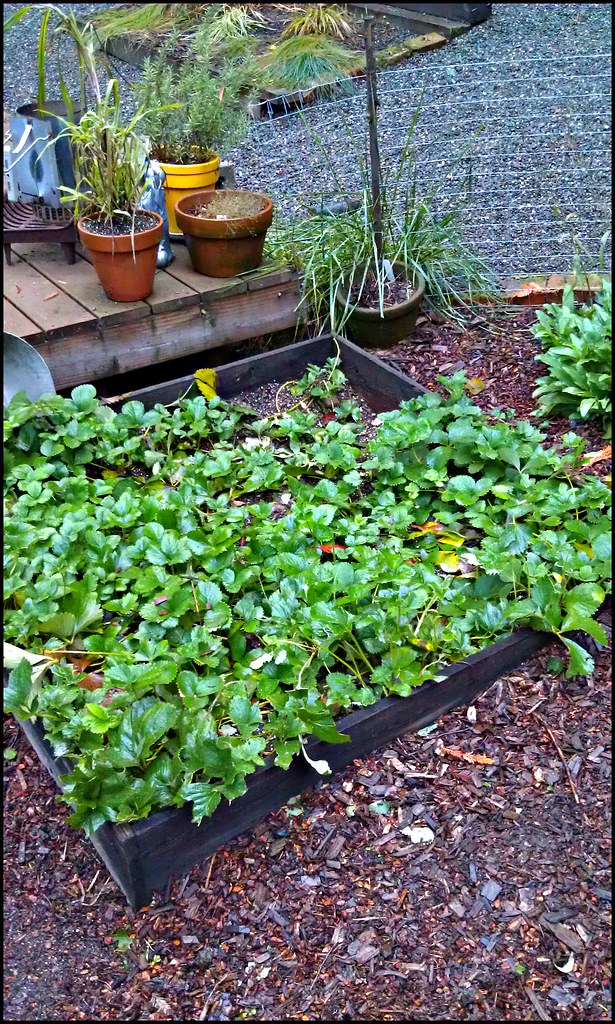
Strawberries clearly grow without sun.

Strawberries are not a cover crop, but because they provide me with greenery year round and they remind me of a cover crop, they deserve a mention. The strawberry bed will hopefully yield us some fruit next year. I painstakingly plucked every last fruit at the first sign of it this year because I read somewhere that you'll get much better yields the following year if you keep your strawberry plants in a phase of vegetative growth the first year. Also, note that strawberries do not like being confined to garden beds. Kept trying to sneak its way out all summer with a little tendril here, another one there. strawberries are sly like that

Happy clover everywhere.

I'm not really looking forward to ripping out all the cover crops and letting them rot into the soil because that will mess with my sense of organization and garden feng shui. However, I am interested to see how many times I can reseed these beds over the course of the remaining fall and into winter. I see myself going a little bat crazy in the bulk cover crop aisle at Mountain Feed soon.